Featuring a curated selection from the permanent collection
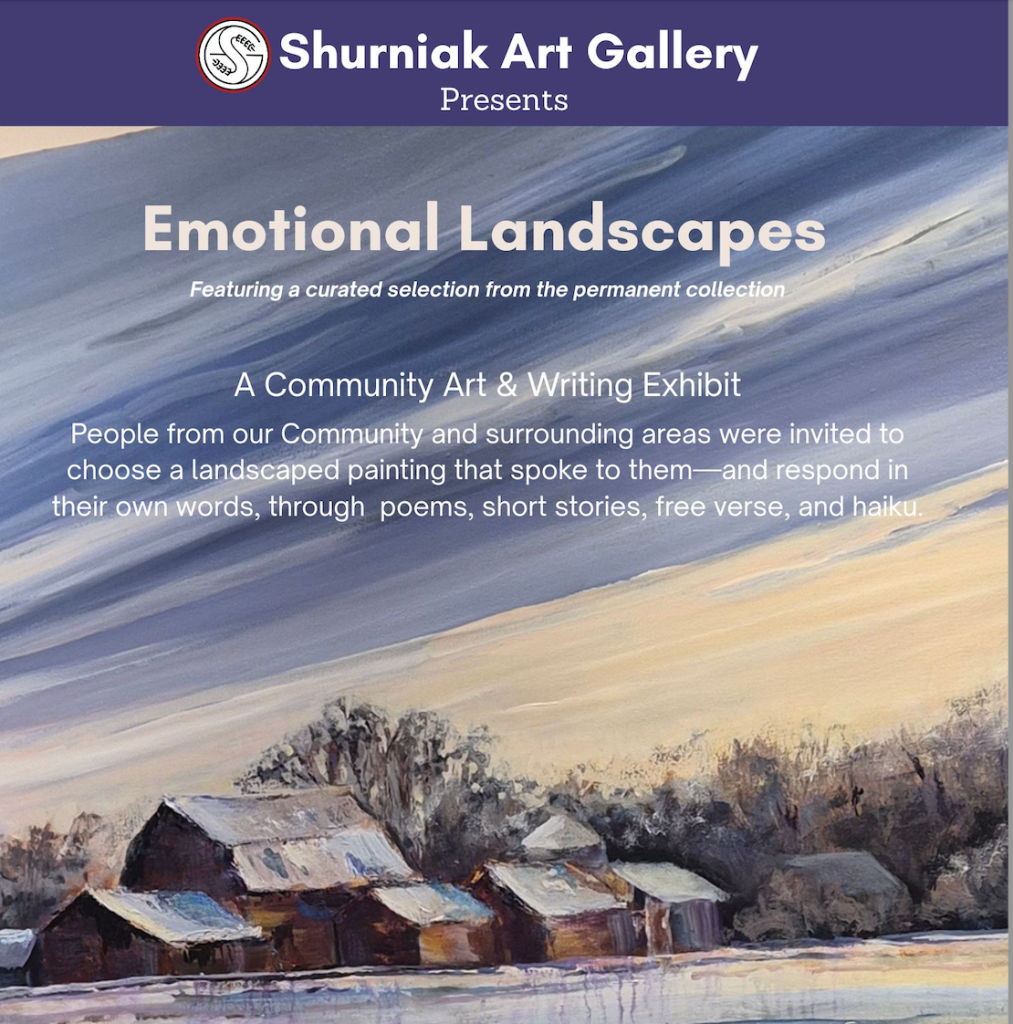
This exhibit celebrates how art becomes conversation between the artist and the viewer, revealing how landscapes can hold emotion, history, and meaning far beyond what is seen.
The Arts Matter
Featuring a curated selection from the permanent collection
This exhibit celebrates how art becomes conversation between the artist and the viewer, revealing how landscapes can hold emotion, history, and meaning far beyond what is seen.
A Brief Introduction to Zhang Tao’s Chinese-Brush Paintings
By Lien Chao
It is a great opportunity for the Canadian audience in Saskatchewan to attend Zhang Tao’s solo-exhibition, and to meet the traditional scholarly Chinese artist in person.
Zhang Tao’s paintings embodied various aspects of traditional Chinese culture. First of all, the ancient art form of Chinese Brush-Painting with its unique art media: Chinese ink, water, mineral colours, painted on highly absorbable Xuan Paper.
Chinese Brush-Painting artists usually specialized in one or two categories of artistic motifs, for example, landscapes, figures, birds and flowers, small or big animals, etc. Walking through Zhang Tao’s exhibition, the audience may have sensed that the artist specializes in the motifs of Birds and Flowers.
With vivid depictions of sparrows, flying insects of bees and butterflies, and even squirrels eating pine nuts, the artist also depicted three different seasons in nature: spring, summer, and autumn. As for flowers, Zhang Tao chose a rich purplish red colour for his peonies, instead of the usual pink, indicating his peonies actually standing for prosperity.


As a scholarly artist, Zhang Tao prefers to paint bamboo with its pointing leaves and slim branches. Historically, scholarly artists had tirelessly depicted bamboo for its uprightness and hollow nature as an admirable personality and moral quality. Zhang Tao has inherited this traditional vision and practice.
In addition to the depictions of birds and flowers, the audience may also notice some of Zhang Tao’s small paintings were shaped like a circular paper fan or a foldable pocket paper fan. Since paper fans were widely used by the rich and the poor in Chinese history, their shapes have survived as a sub-categorical art form for artistic presentations.
Calligraphy is the foundation for traditional scholarly Chinese artists. After the painting is completed, the artist will add the title in black ink. The title could be a phrase about the painting, a quotation from a famous poem, or a paragraph of prose created by the artist. Finally, it’s time for the artist to sign the painting in ink, and press down the personal seal in red to authenticate the painting. Sometimes the artist will add one or two idle seal prints to better balance the white space left on the painting.
As Zhang Tao’s friend, I hope my brief introduction will help the audience enjoy the artist’s large collection of paintings at the solo exhibition. As Canadian audience, let’s follow Zhang Tao’s life-time pursuit as a traditional scholarly artist of Chinese Brush-Painting.
Toronto

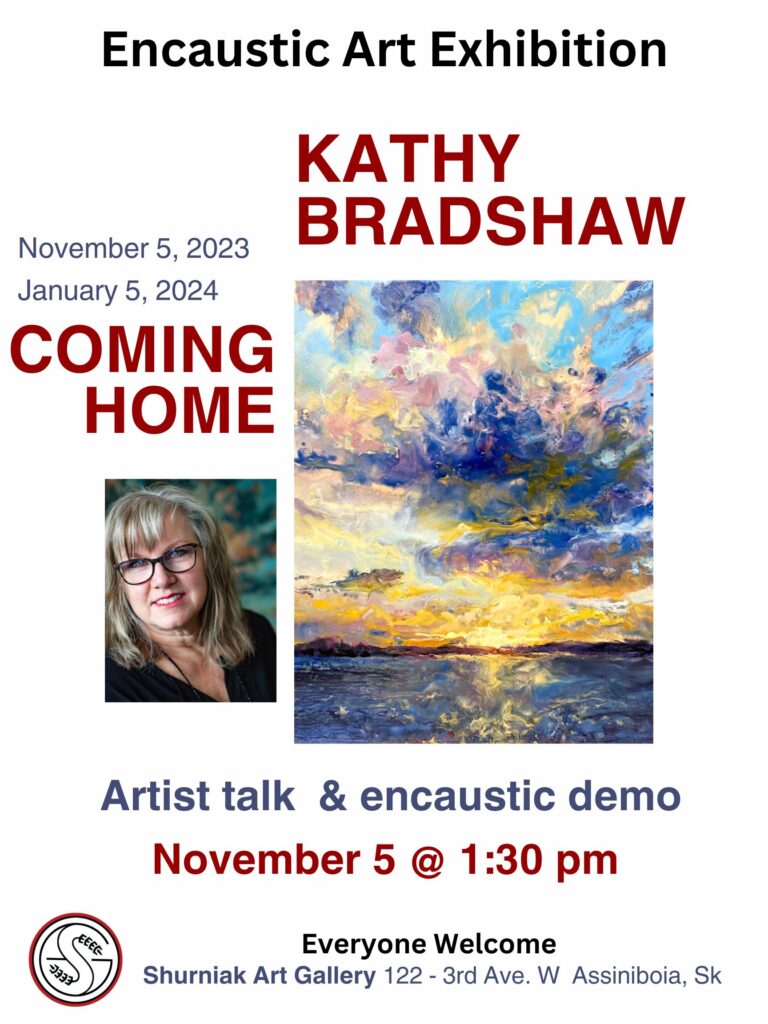
This exhibit “Coming Home” celebrates the landscape and animals of the prairies where Kathy grew up. Using encaustic on various surfaces, some of which are gathered from buildings of the past, she captures the essence of rural Saskatchewan through this unique medium.
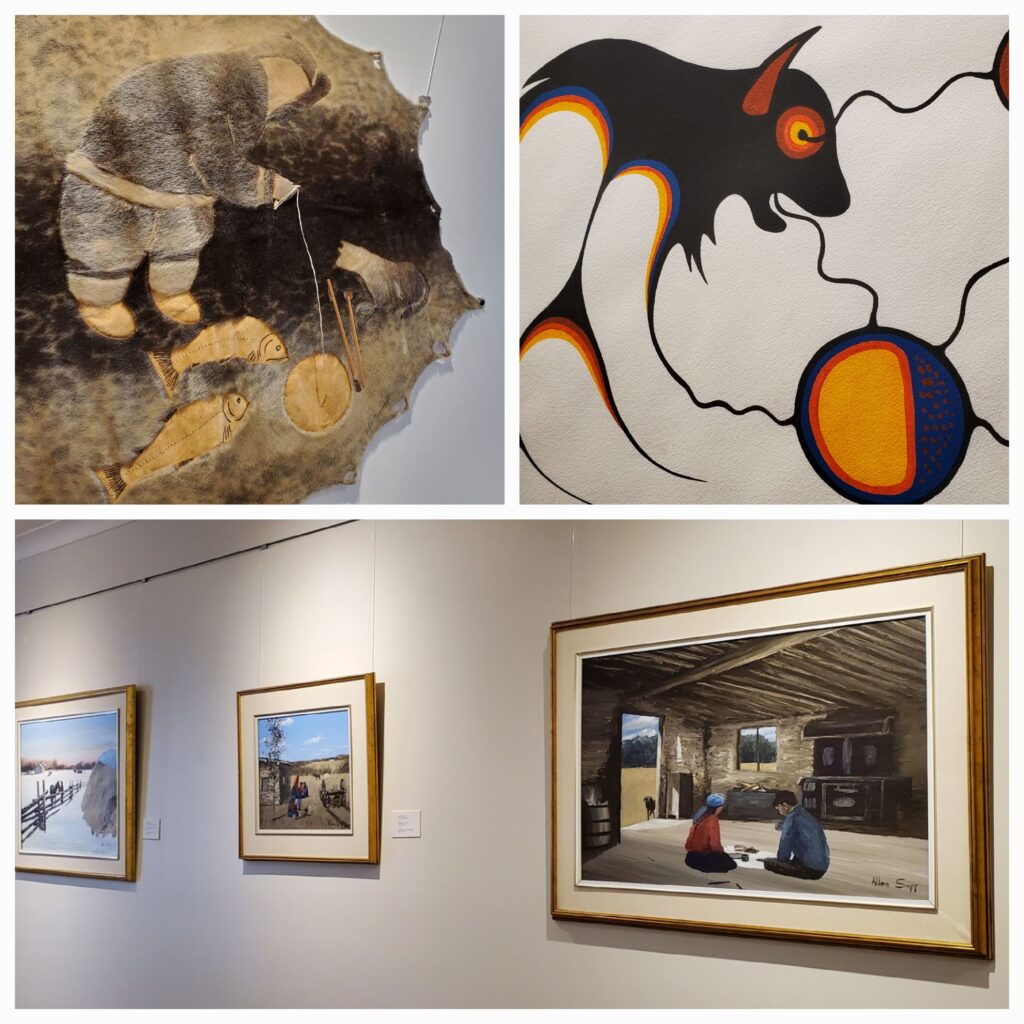
The Path Less Taken.
This exhibition created from Bill Shurniak’s permanent collection focuses on Indigenous life through the eyes of artists Allan Sapp, Micheal Lonechild, Clemence Wecoupe and more. Together a seal skin, antler carving, oil, acrylic and watercolor paintings showcase the variety of mediums represented.
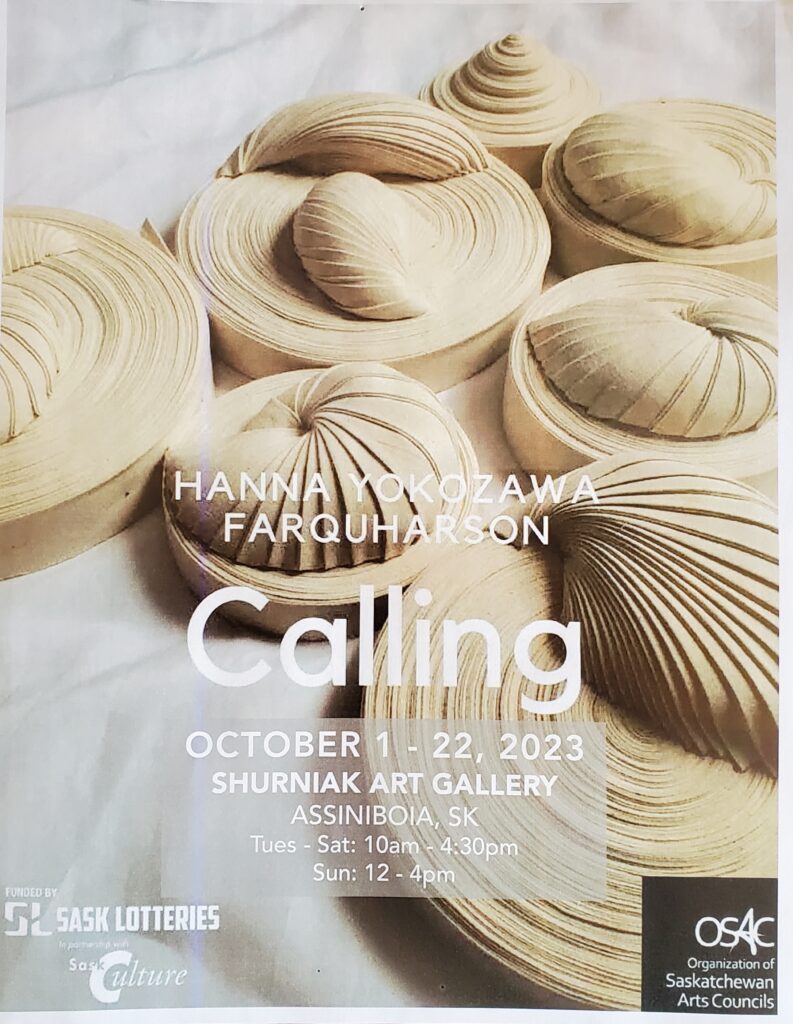
Calling
The exhibition, ‘Calling’, features the beautifully crafted and thoughtfully meditative fibre works of Saskatchewan artist, Hanna Yokozawa Farquharson.
Since July 2021 she has created over 100 installations at residential school historical sites, museums, art galleries and other public spaces.
Many of these spaces serve to present a colonial viewpoint and primarily speak about the settlers who arrived and lived here, but not the Indigenous people that were displaced along the way.

The installations are constructed with red wool, silk, cotton yarn.
Red is the colour of blood. Red is the slur against Indigenous people. Red is the colour of passion and anger, danger and power, courage and love.
Her hope is to bridge the gap between settlers and Indigenous, Métis, and Inuit people by creating art that is approachable and non-confrontational and starting a conversation about decolonization and reconciliation.
A huge thank you!
Funding support from SkArts Community Micro-grant
Exhibition Sponsor – Canalta Hotels – Assiniboia
 Shurniak Art Gallery -SAG